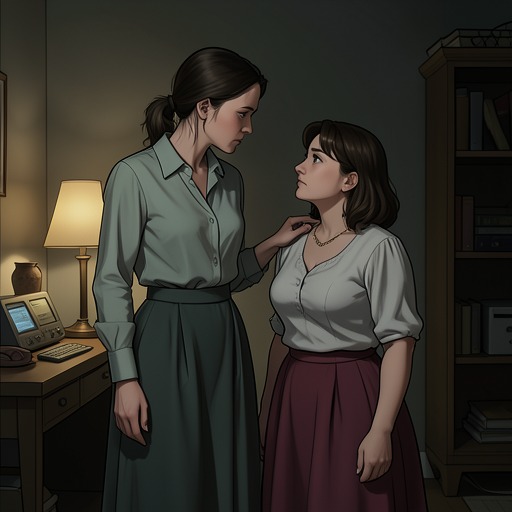
Lucy rejects Lily's apology
The Earthquake BirdLucy Fly’s rejection of Lily Bridges’s apology turns a proposed reconciliation into a definitive break. Lily offers to give up Teiji if Lucy will remain her friend; Lucy refuses, closes the door, and then goes looking for her, caught between pity, betrayal, and a desire for revenge. The scene’s force lies in that sequence: a conditional offer cannot undo the hurt, and the violence Lucy admits wanting is sharply distinguished from the specific acts she says never entered her mind.
Background and Arrival
Earlier that day, Lucy had seen Lily and Natsuko, and she had unpinned laundry in her apartment. When the doorbell rang again, she wondered whether Teiji had come, though she already believed she would not see him again. She nevertheless found herself wanting him to be at the door. This expectation matters to the encounter that follows: Lily arrives in the space left by Lucy’s hope for Teiji, making the visit an immediate confrontation with the relationship that has injured her.
Lucy had just taken a pair of stockings off the washing line. Instead of walking a few paces to the basket or pinning them back up, she draped them over her shoulder and went to answer the door. She describes the gesture as neither a major decision nor a conscious one. Its incidental quality sets the domestic scene against the emotional significance of the visitor: Lucy’s hand is occupied with an ordinary task as the friendship reaches its breaking point.
The Apology and Refusal
Lily is shaking at the doorway. Several times, her hand rises to her cheek and falls again while Lucy fixes her eyes on hers. Lily says she had not wanted to hurt Lucy and had been caught up in the excitement of the weekend. She speculates that, if she had wanted to hurt anyone, it might have been Andy, though he would never know. She is uncertain whether she and Teiji have a future together, but offers to end things with him immediately if that would allow her and Lucy to remain friends.
Lily’s offer makes friendship conditional on Lucy’s response to Teiji: she will give him up if Lucy agrees they can still be friends. Lucy does not accept that bargain. Asked, “So is it OK? We’re still friends?” she answers, “No, we are not. Goodbye.” She closes the door. The exchange is short, but its terms are clear: Lily’s willingness to end the romance does not restore the friendship, and Lucy makes the separation final rather than negotiating over what Lily is prepared to surrender.
Anger Behind the Door
Lucy’s account does not reduce her response to a single feeling. She remembers pitying Lily, who stood quivering on the doorstep, and recognizes that Lily may have been shocked by what she had done. Lucy also acknowledges that it took courage for Lily to come and face her. Those feelings coexist with disgust and renewed anger; pity does not soften the decision or become forgiveness.
The mention of Teiji sends Lucy back in memory to Tokyo Station, to the moment she cried out and people turned to stare. That recollection changes the balance of feeling: her pity dissolves, and she thinks of Lily as someone who stole her lover and deserted her as a friend. Behind the closed door, Lucy wonders why she let Lily off so lightly. Her anger grows until she shouts, although she cannot recall what words she yelled. The neighbor’s vacuum cleaner soon rises above her voice, an ordinary household noise that interrupts but does not resolve the outburst.
Search and the Limits of Revenge
Lucy goes downstairs only a couple of minutes after Lily has left, hoping to find her, but the street is empty. She thinks she hears a brief, quiet burst of laughter, though she sees nothing and the sound stops almost at once. She walks farther toward the station, keeping her eyes wide and sweeping them across the road and into its corners and recesses. The effort makes her eye muscles ache; she does not want to blink or narrow her eyes until she has found Lily.
At the station Lily is still nowhere to be seen. Lucy turns back, reasoning that Lily could not have run there, bought a ticket, and boarded a train in the time available; the road is long and straight, and Lucy believes she would have seen her ahead. Cars pass, then the world goes quiet except for Lucy’s footsteps on the pavement. The search converts the refusal into pursuit, but it provides no encounter and no answer about where Lily has gone.
Lucy then states the boundary of her violent thoughts with unusual specificity. She wanted to kill Lily, wring her neck, and kick her until she stopped moving; she wanted Lily to understand how much pain she could cause in return for the betrayal. But Lucy also insists that she did not want to stab or dismember her, decapitate her, or throw the pieces into Tokyo Bay, and that those acts never crossed her mind. The distinction does not cancel the rage. It places Lucy’s expressed wish for retaliation beside a more particular form of violence that she explicitly denies imagining, leaving the reader with both her fury and the limits she asserts around it.